Promoting Awareness on Maternal Vaccines (PAM)
Dr Brenda Okech, UVRI-IAVI HIV Vaccine Programme, Entebbe, Uganda
The UVRI-IAVI HIV Vaccine Program facilitated this public engagement project on maternal vaccines in fishing communities (FC) in Lake Victoria, Uganda. The project consisted of a baseline study to assess existing knowledge on maternal vaccines and a subsequent information campaign built on the study results in the targeted communities.
The study aimed to determine the level of knowledge, attitudes and practices regarding maternal vaccination and consecutively raise awareness on the topic. In addition, Village Health Teams (VHTs) and students were trained in assessing the vaccination status for maternal and childhood vaccines in the FCs.
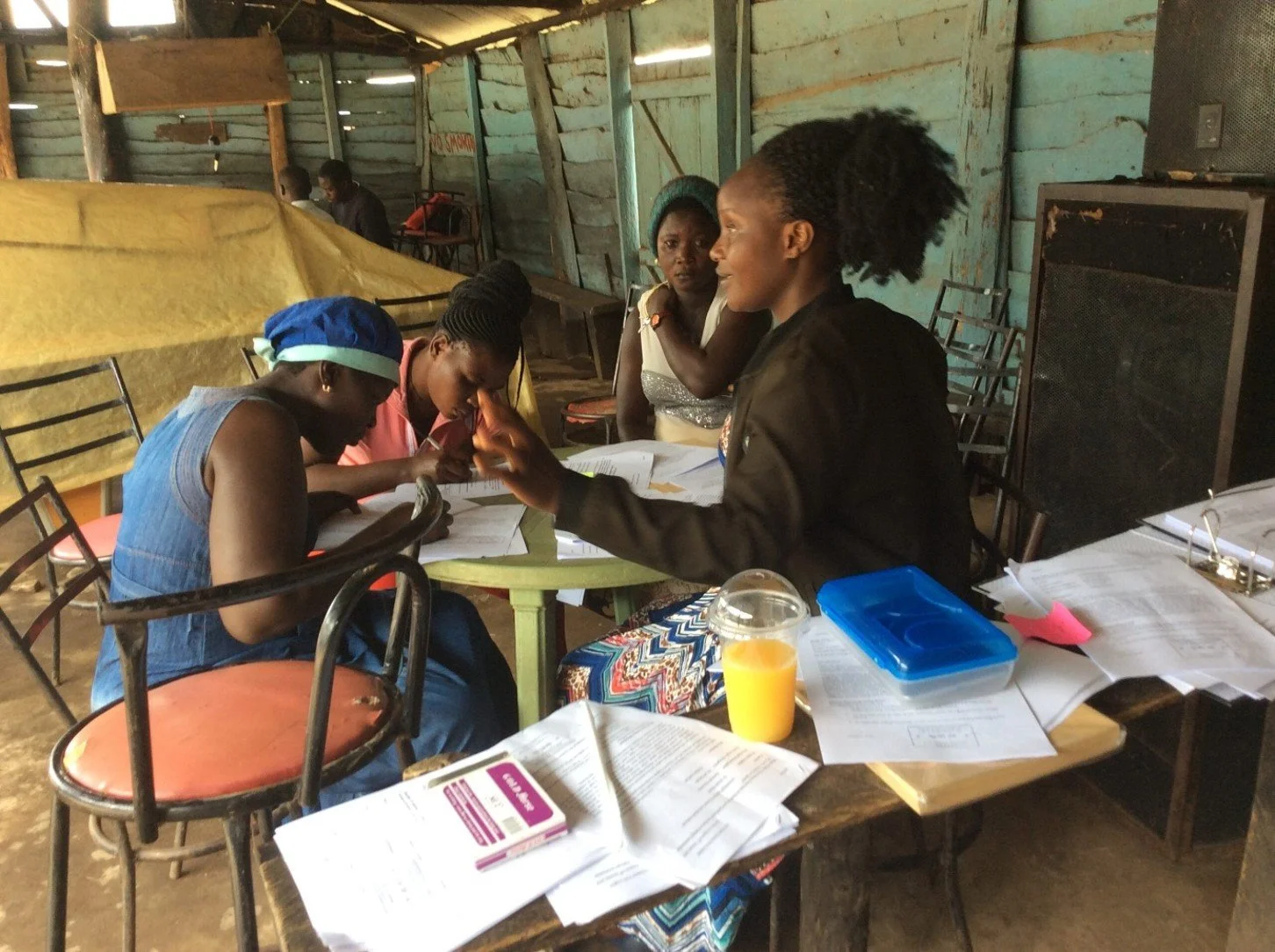
Community entry meetings were conducted with 318 participants and 26 community leaders of the Kasenyi landing site to introduce the project to the communities. Targeted community meetings were conducted on Koome Island with 107 participants. During the study, both quantitative and qualitative approaches were applied by using questionnaires and in-depth interviews. The study participants were health workers, VHTs, students and women with children below five years. A total of 425 individuals were interviewed (317 female, 108 male). While the community members had heard about immunisation in general, the majority was not aware of the different immunisable diseases (only 29.9% knew about BCG, 9.4% about hepatitis B, 1.6% about pneumonia, 1.2% about influenza, and 35.1% about tetanus). 85.4% of the participants knew polio and 74.4% measles. Only 28.6% had heard that women are vaccinated against tetanus, 22% against HPV and 28% did not know the types of vaccines given to women.
For raising awareness of maternal immunisation in the communities, banners with pictorial information and leaflets in local languages were distributed with the support of 50 VHTs, who also answered questions that emerged in the communities. In addition, two schools were provided with skits to educate community members and 40 students were engaged in sensitising community members on immunisation, together with two drama groups. Furthermore, audio messages were produced in Luganda and English and were broadcasted through local radio stations for a sustained sensitisation of the local population on maternal immunisation.
-
To determine the level of knowledge, attitudes and practices towards maternal and childhood vaccines and raise awareness of maternal and childhood vaccines among people in fishing communities (FCs) of Lake Victoria.
-
Communities living in FCs of Lake Victoria.
-
2019-2020
-
Cs around Lake Victoria – including the village health teams (VHTs) working in these area, community members and teachers/adolescents through school sensitization
-
Village Health Teams (VHTs) engaged in planning, coordinating and mobilization of communities for sensitization meetings
Drama groups from two schools developed a skit on immunization that was used to educate fellow students and communities
MoH approved messages printed on leaflets and banners in local languages were distributed during community meetings for further reading
Community sensitization events
-
Leaflets and banners in local languages
Drama/skits developed by adolescents
Radio message on the relevance of maternal and neonatal vaccination
Survey for pre and post activities in the communityvideo viewers before and after watching video (for phase II of the project)
-
Change in people’s perception of immunization as evidenced by their submissions during the community sensitization meeting and endline survey (completed after the project ended).
Evidence generated from the project will inform more structured education/sensitization and immunization intervention programming by the team in future.
Increased visibility of the IMPRINT NETWORK among the vaccination fraternity.
Improved communication skills of UVRI-IAVI PAM staff on immunization. They contributed to the development of skits and audio messages used for sensitization.
Students in drama groups were trained on maternal and childhood immunization and participated in skit development.
Improved communication skills of UVRI-IAVI PAM staff on. immunization. They contributed to the development of skits and audio messages used for sensitization.
Students in drama groups were trained on maternal and childhood immunization and participated in skit development.